





255063✽
I have had a slight disagreement with a friend this morning over some English grammar. Is it possible to say :-
A large amount of goals were scored at the local football match or should it be :- A large number of goals were scored at the local football match. Or can one use both?
Comments (12)

3568✽
by
crazystitcher
29 Jan 2014
+12✽
If you really want to be grammatically correct, then neither of these expressions should be used exactly as you have typed them.
When you say "large amount of.......", the verb is acting on the noun, "amount", which is a singular noun, so a singular verb should be used: "was", not "were". Similarly, when you say "large number of......", the verb is acting on the noun, "number", which is a singular noun, so a singular verb should be used: "was", not "were". When you say "many goals.....", the verb is acting on the noun, "goals", which is a plural noun, so a plural verb should be used: "were", not "was".
Hope this explanation keeps both you and your friend smiling.
When you say "large amount of.......", the verb is acting on the noun, "amount", which is a singular noun, so a singular verb should be used: "was", not "were". Similarly, when you say "large number of......", the verb is acting on the noun, "number", which is a singular noun, so a singular verb should be used: "was", not "were". When you say "many goals.....", the verb is acting on the noun, "goals", which is a plural noun, so a plural verb should be used: "were", not "was".
Hope this explanation keeps both you and your friend smiling.
5 comments
I love this - thank you so much.

Thank you for the detailed explanation. It is fully my opinion too; however, I did not dare to write because I am German and there we have similar rules as now confirmed by you.
Thank you - Maria
Thank you - Maria
Ah,, the English teachers come creeping out of the woodwork. The verb was the immediate issue for me, as well.
Verbs & Nouns get me all mixed up, I go for what sounds OK. maybe next time give each teams score finishing with what a lot of goals or not may goals today. don't know if this is the correct way
Those silly nouns and verbs have to agree. But we have to use the right words to express the meaning.
Oh, I love this!
Oh, I love this!

140723✽
Crazy is quite right - "a large number of goals was scored" is correct but it sounds rather ugly. "Many goals were scored" sounds better to me. I always go for the least number of words!
1 comment
Thank you for your input Sue

33451✽
by
marjialexa
30 Jan 2014
+6✽
I'm with Crazystitcher, I have a BA in English, yes, we're coming out of th woodwork, hee hee hee. The problem is, these expressions have been misused for so long that they sound "wrong" when you say them correctly. If your dispute was over "amount" or "number", think of it this way: a "number" is definable, finite, can be counted. An "amount" is kind of like sugar or flour, infinite grains, so you have to say the "amount" is a cup of sugar or flour, not a number. I know, clear as mud. That's why I wasn't a teacher. But I'm with Sue, "Many goals were scored." Or better yet, the active form, "Our team scored many goals." (or, hopefully, "The other team scored many goals, but they still couldn't win over our team's many more!" hee hee hee)
1 comment
I knew there had to be an English major on here! LOL
7103✽
I think I will stick with math and science--there are too many rules in English, with too many exceptions.
1 comment

I am with you on this one!
7875✽
I love soccer and cheer for any and all goals scored.
Ooh and aah over the near misses too.
It all adds to the love of of the game.
I did read all comments on the grammer and will try to remember my verbs and nouns.
Have a great day.
Hugs
Ooh and aah over the near misses too.
It all adds to the love of of the game.
I did read all comments on the grammer and will try to remember my verbs and nouns.
Have a great day.
Hugs
255063✽

59631✽
by
hightechgrammy
01 Feb 2014
+4✽
Before I read everyone's responses, this elementary teacher would keep it simple and say, "Many goals were scored." If you can count it - use "many." If you have to measure it in a cup or something, use "much." Now I'm going to see what other teachers have said!

234568✽
Hi Sarah,
According to Grammar-Monster.com -------------------
"The term "amount of" is used for things you cannot measure (See non-countable nouns). It usually precedes a singular word.
The term "number of" precedes a plural, countable noun. It can be applied to both animate and inanimate objects."
Taken from the above website. Love Chris
According to Grammar-Monster.com -------------------
"The term "amount of" is used for things you cannot measure (See non-countable nouns). It usually precedes a singular word.
The term "number of" precedes a plural, countable noun. It can be applied to both animate and inanimate objects."
Taken from the above website. Love Chris
1 links:
[1]
GRAMMAR WEBSITE
www.grammar-monster.com
1 comment
This has been terrific having all these answers.
59631✽
59631✽
by
hightechgrammy
01 Feb 2014
+2✽
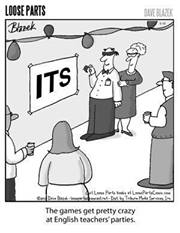
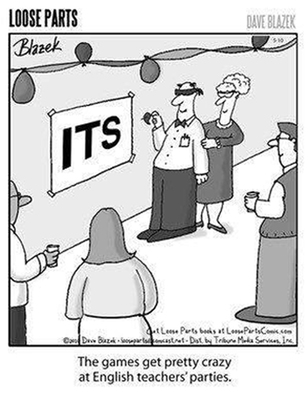
A bigger image so you can read what it says!
2 comments
Excellent!
Thanks for the larger print!!
45918✽
Looks like you have stired a hornets nest with this one... I think it all depends where you went to school, everyone says words or phrases differently but I would uses the latter or is it later?
1 comment
The word is latter :)
140723✽
It is really interesting that English grammar is the same wherever we are in the world. I wonder why it doesn't extend to spelling.....
Incidentally, there are tentative moves afoot here in England to abolish the apostrophe.
Incidentally, there are tentative moves afoot here in England to abolish the apostrophe.
3 comments
Why is that Sue?
How then could you tell the difference between the plural and possessive? Although hardly anyone uses it correctly anymore at any rate--can't remember how many signs I've seen (made by professional companies, no less) advertising a big sale on "tire's". or "pizza's"--and that is actually such a simple rule! But how could one effectively abolish an apostrophe, when it truly is necessary to indicate the possessive? Like "Sue's" design? Perhaps we ought to just teach grammar and spelling instead? What a concept! Hee hee hee
As for the spelling, I'm willing to bet that we old revolutionary Colonials messed that up. Maybe it was being so far from "home", or perhaps on purpose, or we on the frontier just didn't have enough teachers. Eventually even improper usage becomes commonplace, and then someone sticks it in the dictionary...